Green Kitchen Cabinets: Choosing a Timeless Green
Last Updated:
August 19, 2026

Created:
July 31, 2026
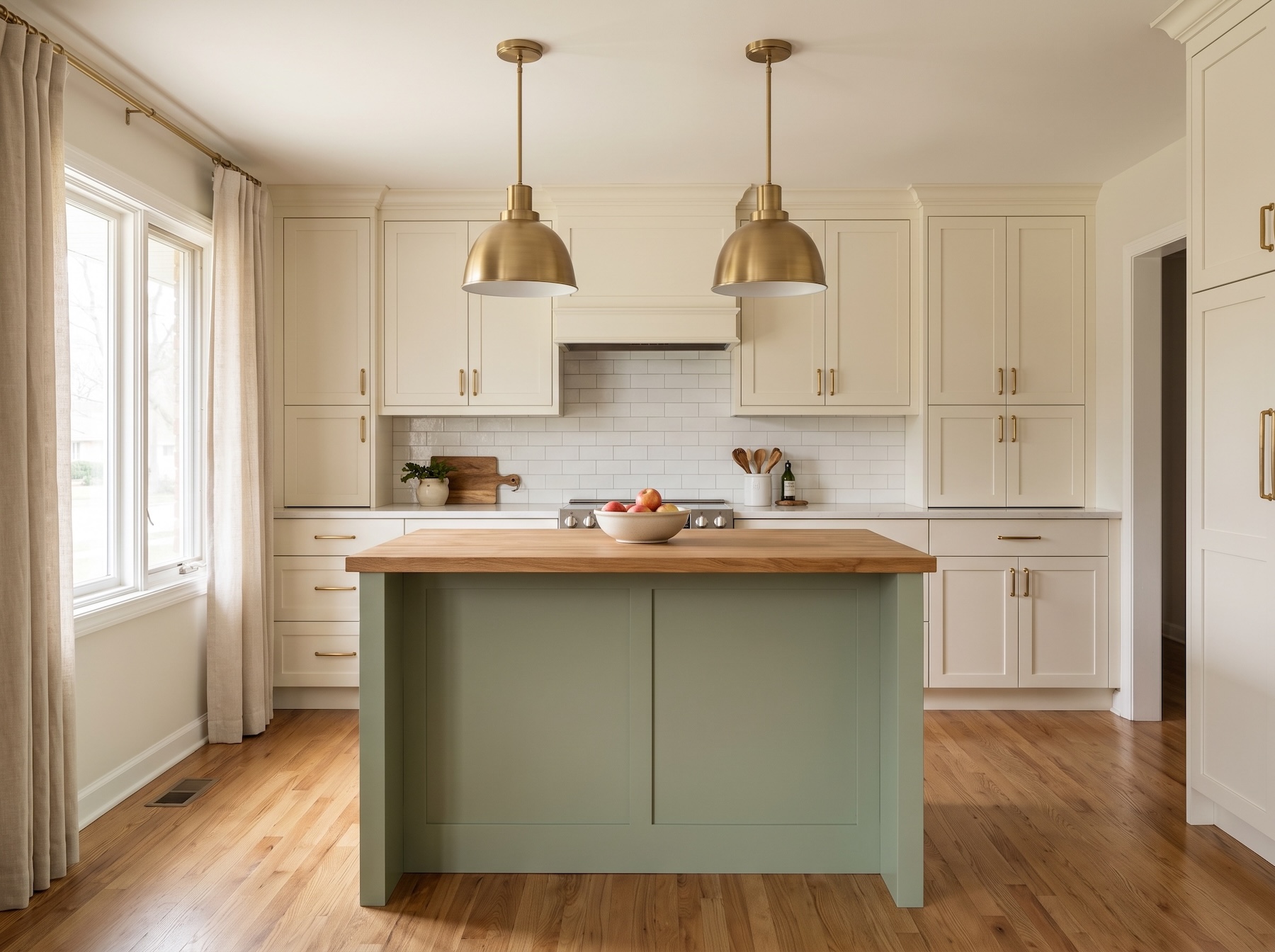
Green kitchen cabinets work when the green has a clear job and everything around it stays calm. The most reliable approach is a soft, warm green on one part of the kitchen, usually the island or the lower cabinets, with a neutral carrying the rest of the room. Choose a green you love in your own light, pair it with quiet counters and warm metals, and it reads as a considered design choice rather than a passing trend.
Green has become one of the most requested cabinet colors we design across the western suburbs and the city, and for good reason: it brings warmth and a little personality without the risk of a bolder color. Here is how we choose the right green, where to put it, and how to keep it looking current for years.
Why green cabinets have staying power
Green sits close to the natural tones people already live with, so it feels calm rather than loud. A sage or olive reads almost like a neutral in a room with wood, stone, and daylight, which is why it ages better than a trend color. The greens that date are the ones chasing a moment; the ones that last are muted, warm, and slightly grayed.
The other reason green works is that it pairs easily. Warm whites, greige, natural oak, brass, and honed stone all sit comfortably next to a soft green, so you are not boxed into a narrow set of finishes to make it work.
Where should the green go?
Put the green where you want the eye to land, and keep the largest surfaces neutral. In most kitchens the island is the natural home for color because it anchors the center of the room. Lower cabinets are the next best choice, since a grounded base hides everyday wear better than upper cabinets do.
A few placements that tend to work:
- A green island against a neutral perimeter, so the island becomes the focal point.
- Green base cabinets under lighter wall cabinets, which keeps the top of the room airy.
- A single green run, like a pantry wall or a hutch, treated as built-in furniture.
- Green on the cabinetry around the range or hood, to make the cooking wall the feature.
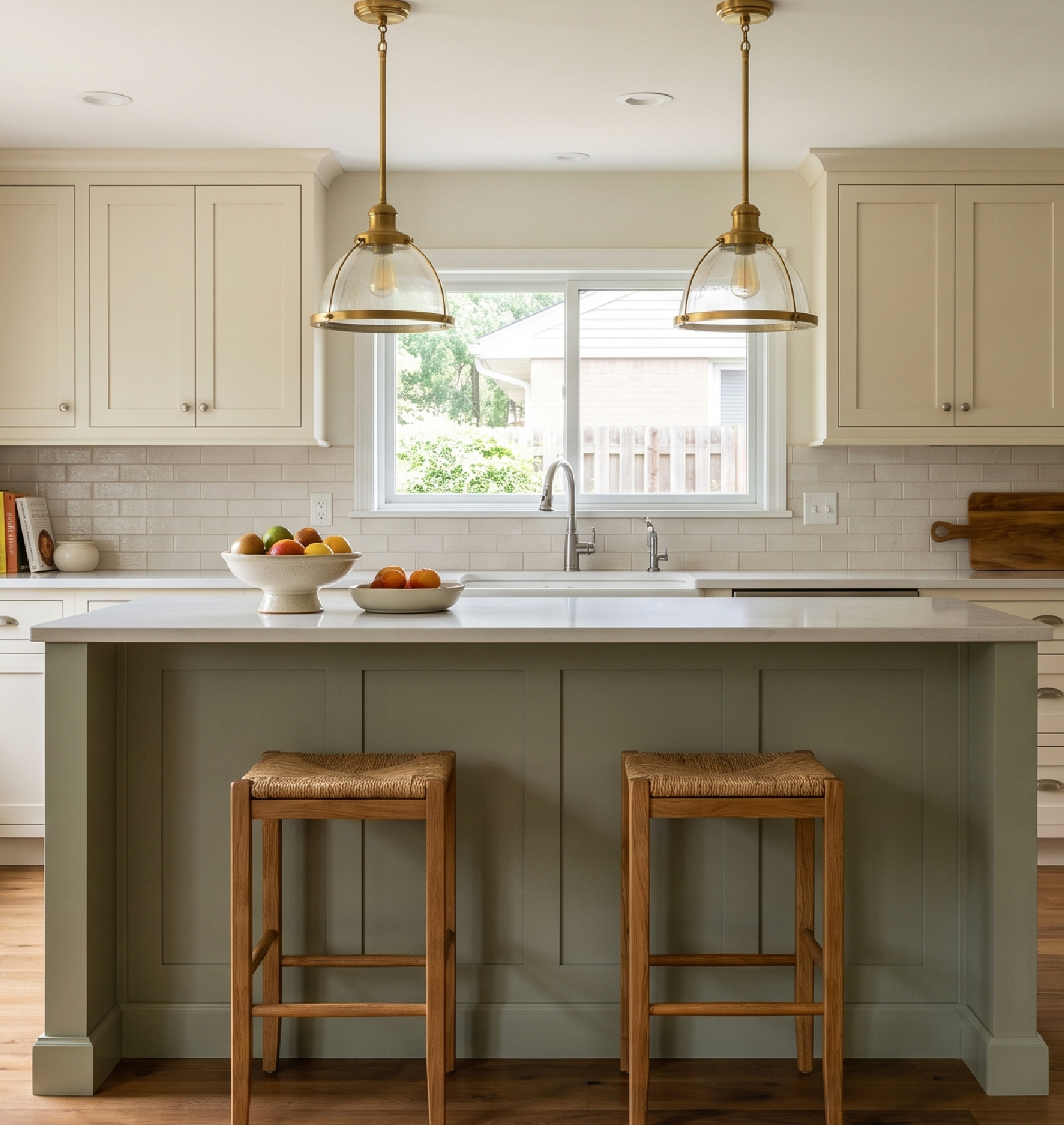
On a recent West Loop kitchen we built the room around a cream perimeter with a soft sage green island in custom cabinetry. The green gave the kitchen a clear center without committing every surface to a color the owners might tire of. You can see it in our West Loop kitchen project.

How do you choose a green that lasts?
Start with the undertone, then test it in your own light. Warm greens with a touch of gray or brown feel timeless and forgiving; cooler, brighter greens are harder to live with and quicker to date. Bring the actual door sample home and look at it in the morning and again at night, because a north-facing kitchen will pull a green cooler and a south-facing one will warm it up. The color you approve on a showroom door is not always the color you get on your wall.
Then let the rest of the room vote. Keep the counters relatively quiet so the green has room to breathe, and tie it together with hardware and lighting rather than a second strong color.
A good green does not shout. It just makes the room feel a little more like yours.
Knowing the cabinet lines helps here too. As an authorized dealer for Greenfield, Siteline, and Cabnova, we can match a green finish to your budget and tell you which greens and door styles hold up over time. We also render the kitchen in 3D before anything is ordered, so you see the exact green on your real layout instead of guessing from one small sample. That is the part of good kitchen design that removes the risk from a color decision.
Green cabinets and the rest of the kitchen
Green plays well with warm neutrals and natural materials, so build the palette outward from there. Warm white or greige perimeter cabinets, a honed or lightly veined counter, unlacquered brass or warm nickel hardware, and oak or walnut accents all support a green without competing with it. If you want contrast, let the counter and backsplash stay calm and add interest through texture instead of a second color.
The goal is a kitchen where the green feels intentional and everything else feels settled. When the plan considers the cabinet color alongside the counters, lighting, and hardware from the start, the finished room looks composed rather than assembled.
Frequently Asked Questions
Are green kitchen cabinets a trend that will date?
A muted, warm green reads as a considered choice rather than a fad, which is why it has stayed popular through several cycles. The greens that date are the bright, cool ones chasing a moment. Choose a soft, slightly grayed green and keep the rest of the room neutral, and the kitchen stays current.
What is the best green for kitchen cabinets?
Warm sage and olive greens are the most livable, because their gray and brown undertones feel close to a neutral. The right one depends on your kitchen's light, so we always test a real sample in the room before committing. A north-facing kitchen usually wants a warmer green than a south-facing one.
What colors go with green kitchen cabinets?
Warm whites, greige, natural oak and walnut, brass, and honed stone all pair easily with green. Keep the counters and backsplash relatively quiet so the green leads, and bring in warmth through metals and wood rather than a second strong color.
Should I do a full green kitchen or just a green island?
For most homeowners a green island or a green lower run against a neutral perimeter is the easier choice to live with, because it adds personality while keeping the largest surfaces timeless. A full green kitchen can work in the right space, but it asks more of the light and the layout. We help you decide based on your room and how much color you want day to day.
Do I need a designer to choose cabinet colors?
It helps, because a color has to work with your counters, floors, lighting, and the daylight in your room, and those are hard to picture from samples alone. Seeing the green in a 3D plan first removes the guesswork. Tell us about your kitchen on our contact page and we will walk you through it.